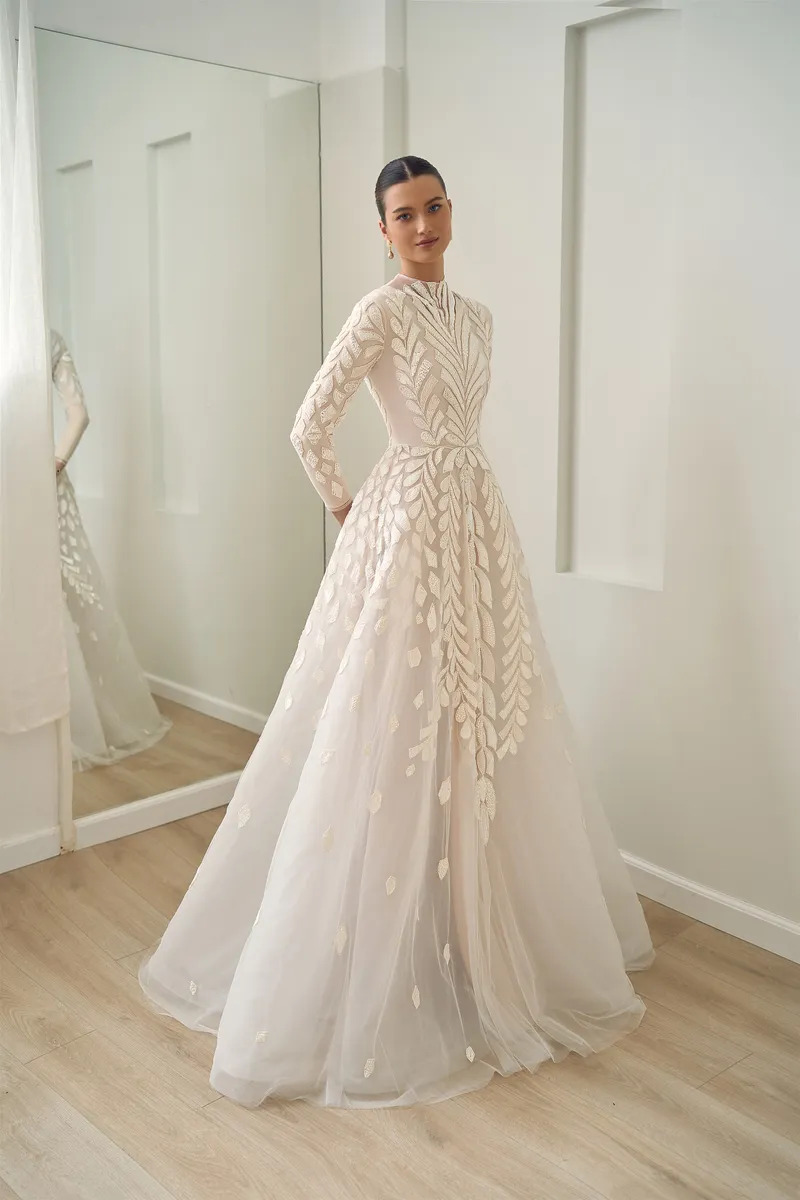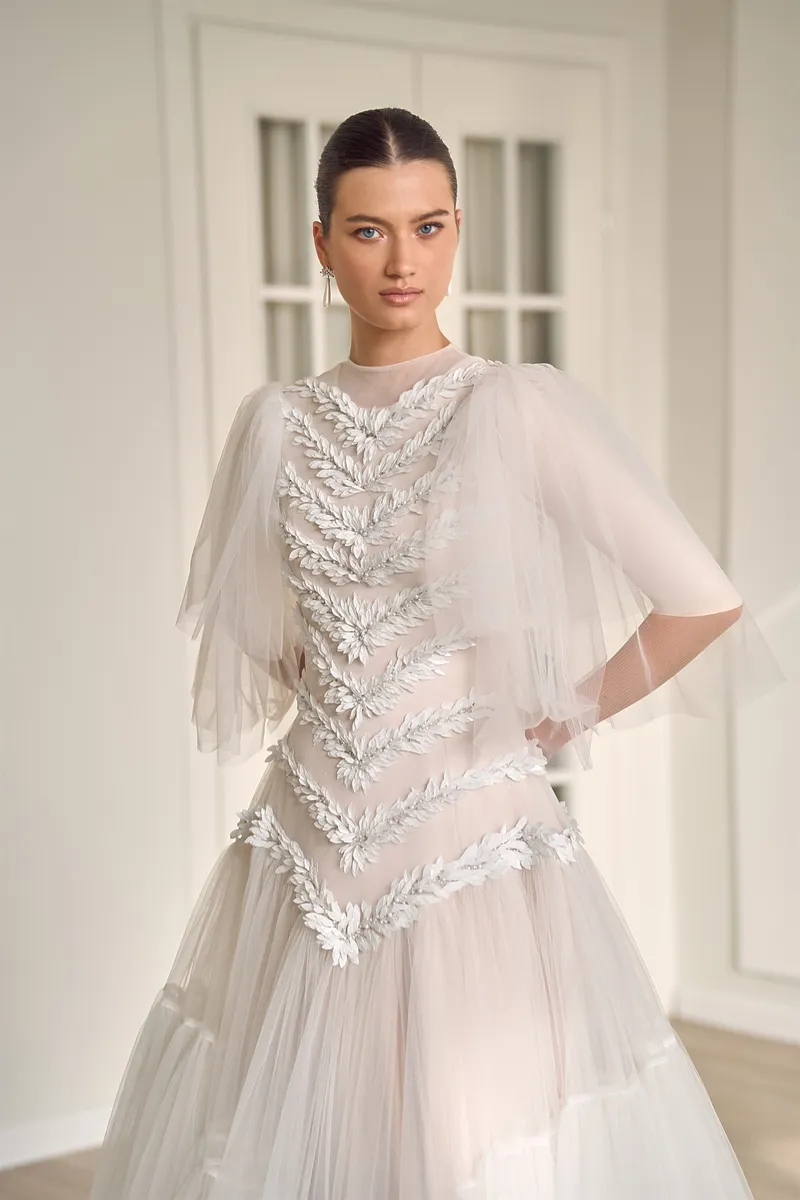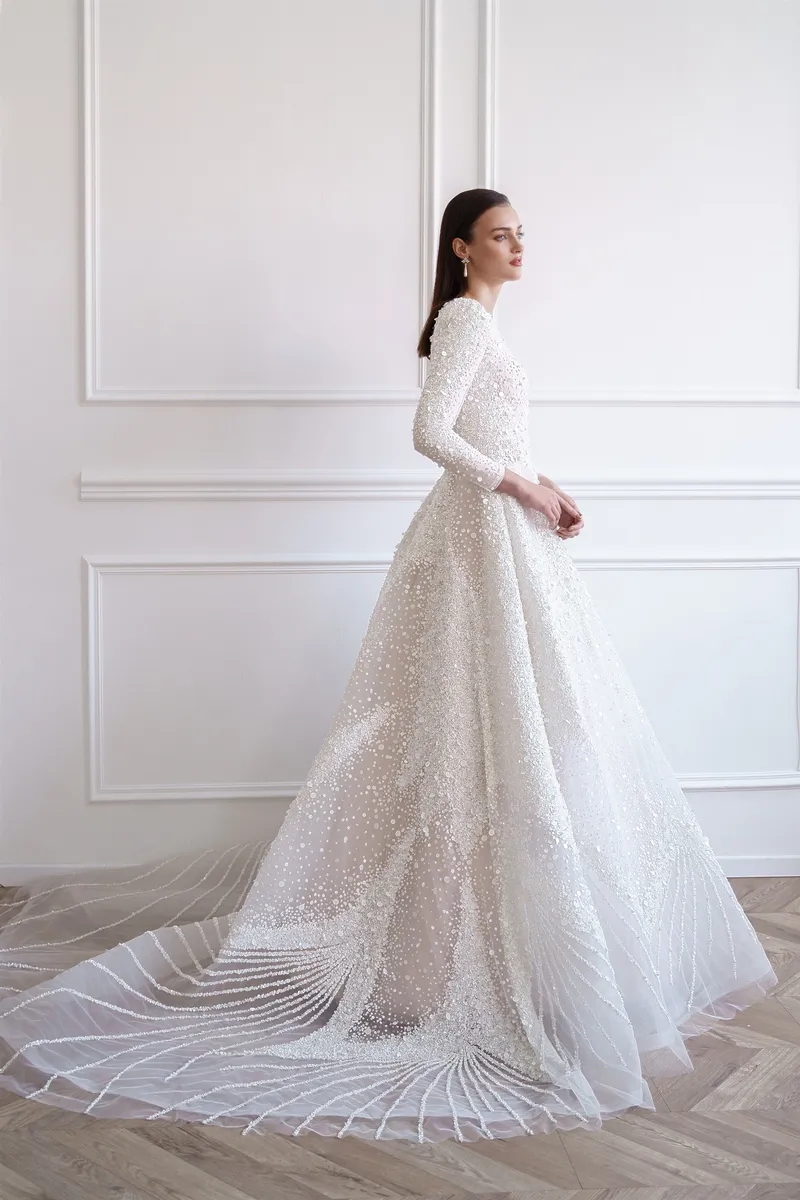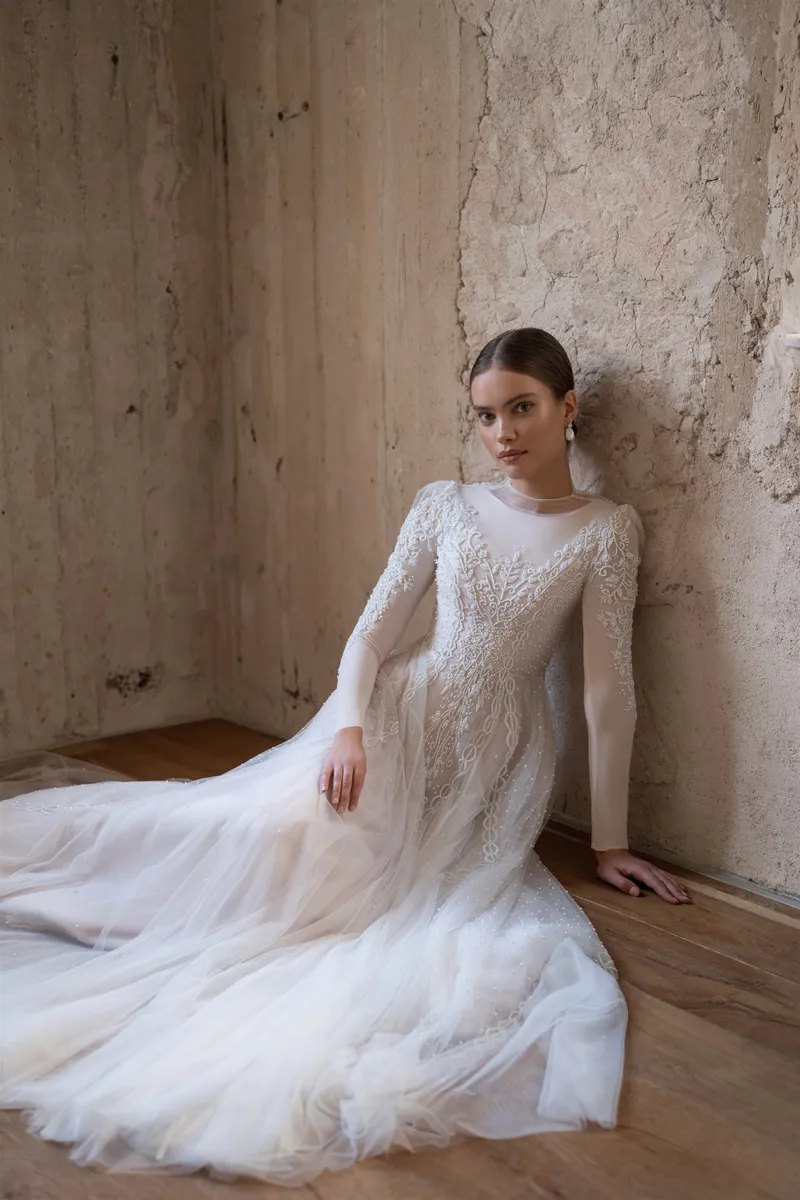
The first question a bride usually asks about a gown is "what is it made of?". This piece is a short summary of the materials that go into an average gown at the studio, and the difference between them.
Lace
The studio's laces are commissioned in limited runs from mills in France and Italy. The patterns are not sold on the open market, so they don't appear in other brands. Most of the laces fall into three families (Chantilly, Alençon, and guipure) and differ in weight, density, and drape. A longer discussion of those is in the article on European lace.
Base fabrics
The base fabrics (silk, satin, tulle, organza, and others) come from regular European suppliers. They are the foundation the rest of the gown sits on, so they are chosen for how they behave under venue lighting as well as how they breathe through a long day.
Beading
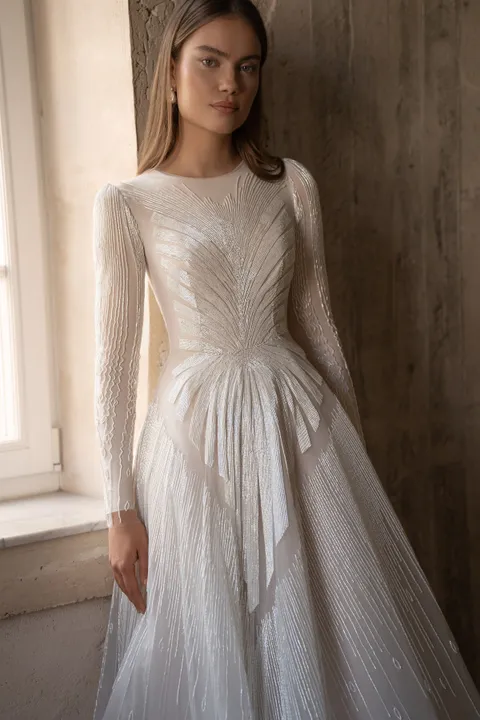
The beadwork uses Swarovski stones, glass beads in different sizes, sequins, and pearls. Every element is set by hand. A heavily beaded bodice can contain thousands of individual pieces and take two hundred hours of work or more.
Embroidery and finishing
The embroidery is done by hand, after the sewing. That includes joining the lace panels, stitching cordonnet around the motifs, and finishing the neckline and sleeve edges.
Why this matters in a modest gown
A sleeveless gown shows a relatively small surface area of fabric. A modest gown shows much more: two full sleeves, a yoke, a closed neckline. Every choice of material (the base fabric, the lace, the beading) is on display four times as much. That is usually the biggest single factor between a modest gown that photographs well and one that does not.
About the Author
Designer & Founder
Amalya Cohen has worked in bridal design for over a decade. She trained at fashion houses in Israel and abroad, and a few years ago opened an independent studio in Jerusalem specializing in dresses for brides who observe modesty. Read more about Amalya.